Ancient Egyptian Jewelry: A Dazzling Journey Through Museum Collections
Discover the legendary craftsmanship, symbolism, and materials that made Egyptian jewelry timeless, from Tutankhamun's golden treasures to Nefertiti's iconic pieces
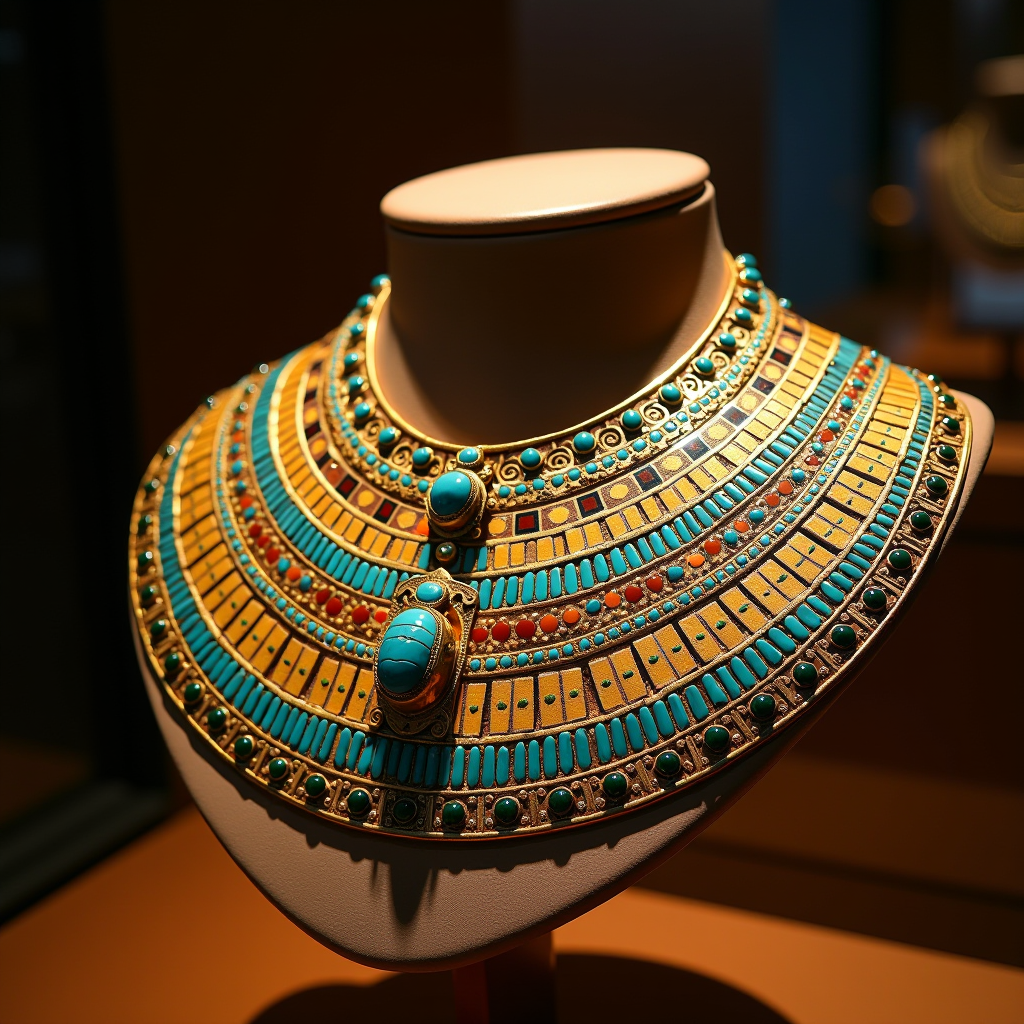
The ancient Egyptians possessed an extraordinary mastery of jewelry-making that continues to captivate visitors to museums throughout Egypt today. These magnificent pieces, crafted thousands of years ago, represent not merely decorative accessories but profound expressions of religious belief, social status, and artistic achievement. When you visit museum Egypt collections, you encounter artifacts that bridge millennia, offering intimate glimpses into a civilization that valued beauty, symbolism, and eternal life.
The Golden Legacy of Tutankhamun
No discussion of ancient Egyptian jewelry would be complete without exploring the treasures of Tutankhamun, the boy king whose tomb yielded the most spectacular collection of jewelry ever discovered in Egypt. When Howard Carter opened the tomb in 1922, he found over 5,000 objects, many of them exquisite jewelry pieces that had remained untouched for over 3,300 years. The Egyptian Museum in Cairo houses the majority of these treasures, making it an essential destination for anyone seeking to understand the pinnacle of ancient Egyptian craftsmanship.
Among Tutankhamun's most famous pieces is his golden death mask, weighing approximately 24 pounds of solid gold inlaid with lapis lazuli, carnelian, quartz, obsidian, turquoise, and colored glass. This masterpiece demonstrates the Egyptians' sophisticated understanding of metallurgy and their ability to combine multiple materials into harmonious compositions. The mask's striped nemes headdress, cobra and vulture symbols, and intricate facial features showcase techniques that required years of training and exceptional skill.
The young pharaoh's pectoral ornaments represent another highlight of ancient Egyptian jewelry design. These large chest pieces, worn suspended from the neck, feature complex scenes rendered in cloisonné work—a technique where gold strips create compartments filled with semi-precious stones and colored glass. One particularly stunning pectoral depicts a scarab beetle pushing the sun disk across the sky, flanked by protective deities. The symbolism embedded in such pieces served protective and religious functions, ensuring the wearer's safe passage into the afterlife.
Tutankhamun's collection also includes numerous rings, bracelets, earrings, and collars that demonstrate the variety of jewelry types worn by Egyptian royalty. His broad collars, composed of multiple rows of beads arranged in intricate patterns, exemplify the Egyptian aesthetic preference for bold, colorful designs that covered large areas of the body. These pieces weren't merely decorative—they represented divine protection, with each element carefully chosen for its symbolic meaning and magical properties.
Queen Nefertiti and Royal Women's Adornments
While Tutankhamun's treasures dominate popular imagination, the jewelry associated with Queen Nefertiti and other royal women reveals equally sophisticated artistry and provides insights into feminine fashion in ancient Egypt. Nefertiti, whose name means "the beautiful one has come," lived during the 18th Dynasty and is renowned for her iconic painted limestone bust, now housed in Berlin's Neues Museum. However, Egyptian museums contain numerous pieces that reflect the jewelry styles she would have worn.
Royal women of Nefertiti's era favored elaborate collar necklaces that extended from the base of the neck to the shoulders, creating a stunning visual effect. These collars typically consisted of multiple strands of cylindrical beads made from faience (glazed ceramic), gold, and semi-precious stones arranged in geometric patterns. The colors held specific meanings: blue represented the heavens and fertility, green symbolized regeneration and new life, red signified power and vitality, while gold embodied the eternal and divine nature of the sun god Ra.
Diadems and headbands worn by queens like Nefertiti showcased some of the most delicate goldwork in ancient Egypt. These pieces often featured uraeus serpents (representing the protective cobra goddess Wadjet) and vulture motifs (symbolizing the goddess Nekhbet), both signifying royal authority and divine protection. The craftsmanship required to create these intricate pieces involved techniques such as granulation (attaching tiny gold spheres to create textured surfaces) and filigree (twisting fine gold wires into decorative patterns).
Earrings became increasingly popular during the New Kingdom period when Nefertiti lived, representing a shift in fashion preferences. Egyptian museums display various styles, from simple gold hoops to elaborate pendant earrings featuring miniature sculptures of deities, animals, and hieroglyphic symbols. These pieces demonstrate the Egyptians' ability to work gold into remarkably thin sheets and create three-dimensional forms at miniature scales, techniques that required exceptional manual dexterity and artistic vision.
Materials and Craftsmanship: The Technical Mastery
The materials used in ancient Egyptian jewelry reveal sophisticated trade networks and geological knowledge that spanned the ancient world. Gold, sourced primarily from Nubia (modern-day Sudan), formed the foundation of most royal jewelry. The Egyptians developed advanced techniques for extracting, refining, and working gold, including methods for creating various alloys that altered the metal's color and properties. Electrum, a naturally occurring gold-silver alloy, was particularly prized for its pale, luminous appearance.
Semi-precious stones played crucial roles in Egyptian jewelry, each selected for specific symbolic and aesthetic purposes. Lapis lazuli, imported from Afghanistan, represented the night sky and was associated with the gods. Turquoise from the Sinai Peninsula symbolized joy and delight. Carnelian, found in Egypt's Eastern Desert, represented life force and vitality. Amethyst signified royalty and divine power. The Egyptians also created artificial materials, including faience and colored glass, demonstrating their innovative approach to achieving desired visual effects when natural materials were scarce or expensive.
The technical processes employed by ancient Egyptian jewelers remain impressive even by modern standards. Casting techniques allowed artisans to create complex three-dimensional forms by pouring molten metal into molds. Repoussé work involved hammering metal sheets from the reverse side to create raised designs. Chasing refined these designs by working from the front surface. Cloisonné work, mentioned earlier, required creating intricate compartments that were then filled with precisely cut stones or glass, demanding extraordinary precision and patience.
Soldering techniques enabled jewelers to join separate components seamlessly, while wire-drawing allowed them to create fine gold threads for filigree work. The Egyptians also mastered stone-cutting and polishing, transforming rough minerals into perfectly shaped beads and inlays. When you visit museum Egypt collections, examining these pieces closely reveals the countless hours of skilled labor invested in each item, with some pieces requiring teams of specialized craftsmen working for months or even years to complete a single jewelry set.
Symbolism and Religious Significance
Ancient Egyptian jewelry transcended mere ornamentation, serving as powerful vehicles for religious expression and magical protection. Every element—from the choice of materials to the arrangement of symbols—carried specific meanings understood by ancient Egyptians. The scarab beetle, one of the most common motifs, represented transformation, resurrection, and the daily rebirth of the sun. Scarab amulets were worn by the living for protection and placed on mummies to ensure successful passage into the afterlife.
The Eye of Horus (wadjet eye) appeared frequently in jewelry designs, offering protection, healing, and restoration. This symbol, representing the eye of the falcon-headed god Horus, was believed to possess magical properties that could ward off evil and ensure good health. Similarly, the ankh symbol, representing eternal life, adorned countless pieces of jewelry, reminding wearers of the Egyptian belief in immortality and the continuation of existence beyond death.
Deities themselves featured prominently in jewelry designs. Representations of gods and goddesses served as direct connections to divine power and protection. Isis, the great mother goddess, appeared in numerous amulets and pendants. Thoth, god of wisdom and writing, protected scholars and scribes. Bastet, the cat goddess, offered protection for the home and family. Each deity brought specific blessings and safeguards to the jewelry's wearer, making these pieces essential components of daily life and religious practice.
The arrangement and combination of symbols followed complex rules understood by priests and educated Egyptians. Certain combinations amplified protective powers, while specific materials enhanced particular magical properties. For example, lapis lazuli combined with gold created especially potent protective amulets because the blue stone represented the heavens while gold embodied the eternal sun. Understanding these symbolic layers adds profound depth to museum visits, transforming beautiful objects into windows onto ancient Egyptian worldviews and spiritual beliefs.
Premier Museum Collections: Where to Experience These Treasures
The Egyptian Museum in Tahrir Square, Cairo, remains the premier destination for experiencing ancient Egyptian jewelry. Its collection includes the complete Tutankhamun treasures, occupying an entire floor with dedicated galleries showcasing the young pharaoh's jewelry, amulets, and personal adornments. The museum also houses jewelry from other royal tombs, including pieces from the Middle Kingdom and New Kingdom periods that demonstrate the evolution of Egyptian jewelry styles over millennia. Plan to spend several hours here, as the sheer volume and quality of pieces demands careful attention and contemplation.
The Grand Egyptian Museum (GEM), located near the Giza Pyramids, represents the future of Egyptian antiquities display. When fully operational, it will house over 100,000 artifacts, including a comprehensive jewelry collection displayed using state-of-the-art exhibition techniques. The GEM's jewelry galleries will provide enhanced lighting, detailed explanatory materials, and interactive displays that help visitors understand manufacturing techniques and symbolic meanings. This museum promises to revolutionize how we experience ancient Egyptian jewelry, making it more accessible and comprehensible to international audiences.
The Luxor Museum, though smaller than Cairo's institutions, offers an intimate and beautifully curated collection of jewelry from the Theban region. Its displays include exquisite pieces from royal and noble tombs discovered in the Valley of the Kings and surrounding areas. The museum's modern design and excellent lighting allow visitors to appreciate fine details often difficult to see in larger, more crowded institutions. The jewelry collection here provides context for understanding how these pieces functioned within ancient Theban society and religious practices.
The Nubian Museum in Aswan showcases jewelry traditions from Egypt's southern regions, including pieces that demonstrate cultural exchange between Egyptian and Nubian civilizations. Gold jewelry from Nubian royal tombs reveals both similarities to and differences from Egyptian styles, highlighting how jewelry served as a medium for cultural expression and identity. This museum offers valuable perspectives on how jewelry traditions evolved in regions beyond Egypt's traditional heartland, enriching our understanding of ancient Northeast African artistic achievements.
Regional museums throughout Egypt, including those in Alexandria, Assiut, and Minya, contain smaller but significant jewelry collections that provide insights into local variations and non-royal jewelry traditions. These institutions often display pieces worn by priests, officials, and wealthy merchants, demonstrating that fine jewelry wasn't exclusively reserved for royalty. Visiting these regional museums complements experiences at major institutions, offering more complete pictures of how jewelry functioned across different social classes and geographical areas in ancient Egypt.
Planning Your Museum Visits: Practical Tips and Recommendations
When planning to visit museum Egypt collections focusing on jewelry, timing and preparation significantly enhance your experience. The Egyptian Museum in Cairo becomes extremely crowded during peak tourist seasons (October through April), particularly between 10 AM and 2 PM. Arriving when doors open (typically 9 AM) or visiting during late afternoon hours provides more comfortable viewing conditions and better opportunities to examine pieces closely without crowds pressing around display cases.
Photography policies vary among Egyptian museums, with some prohibiting flash photography or charging additional fees for camera permits. The Tutankhamun galleries at the Egyptian Museum typically prohibit all photography to protect these priceless artifacts from light damage. However, other sections may allow non-flash photography. Always check current policies before your visit and respect restrictions, as they exist to preserve these irreplaceable treasures for future generations. Consider purchasing high-quality museum publications or postcards to take home visual memories of pieces you cannot photograph.
Hiring knowledgeable guides dramatically improves museum experiences, especially for jewelry collections where understanding symbolism and manufacturing techniques adds crucial context. Licensed Egyptologists can explain the significance of specific pieces, point out details easily overlooked, and answer questions about materials, dating, and provenance. Many museums offer official guide services, or you can arrange private guides through reputable tour companies. The investment in expert guidance pays dividends in deeper appreciation and understanding of these remarkable artifacts.
Comfortable footwear and appropriate clothing are essential for museum visits in Egypt. You'll spend hours walking and standing, often on hard floors, so supportive shoes prevent fatigue. Many museums maintain cool interior temperatures to protect artifacts, so bringing a light jacket or shawl ensures comfort even during hot Egyptian summers. Modest dress (covering shoulders and knees) shows respect for local customs and ensures admission to all museum areas without issues.
Consider spreading museum visits across multiple days rather than attempting to see everything in single marathon sessions. Jewelry collections deserve focused attention and contemplation, which becomes difficult when suffering from museum fatigue. Alternating museum days with visits to archaeological sites, markets, or relaxation time creates balanced itineraries that allow proper appreciation of each experience. This approach also provides opportunities to reflect on what you've seen and develop questions for subsequent visits or guide consultations.
Experience Ancient Egyptian Jewelry Firsthand
The dazzling world of ancient Egyptian jewelry awaits your discovery in museums throughout Egypt. From Tutankhamun's golden treasures to the elegant pieces worn by queens and nobles, these collections offer unparalleled opportunities to witness the artistry, symbolism, and technical mastery that made Egyptian jewelry legendary across millennia.
Conclusion: Timeless Beauty and Enduring Legacy
Ancient Egyptian jewelry represents one of humanity's most remarkable artistic achievements, combining technical virtuosity with profound symbolic meaning and timeless aesthetic appeal. These pieces, created thousands of years ago, continue to inspire contemporary jewelers, artists, and designers while captivating millions of museum visitors annually. The craftsmanship evident in every piece—from the precise cutting of semi-precious stones to the delicate goldwork of filigree patterns—testifies to the dedication, skill, and artistic vision of ancient Egyptian artisans.
When you visit museum Egypt collections, you encounter more than beautiful objects; you connect with individuals who lived millennia ago, sharing their hopes for protection, their beliefs about the afterlife, and their appreciation for beauty. Each piece tells stories about ancient Egyptian society, religion, trade networks, and technological capabilities. The jewelry worn by Tutankhamun, Nefertiti, and countless other ancient Egyptians bridges vast temporal distances, reminding us of fundamental human desires for adornment, meaning, and connection to the divine that transcend time and culture.
The preservation and display of these treasures in Egyptian museums ensures that future generations can continue experiencing the wonder and inspiration they provide. As conservation techniques improve and new discoveries emerge from ongoing archaeological work, our understanding of ancient Egyptian jewelry continues evolving. Each museum visit offers opportunities not only to admire these magnificent pieces but also to participate in the ongoing dialogue between past and present, ancient craftsmanship and modern appreciation, that keeps these treasures alive and relevant in contemporary consciousness.
Whether you're a jewelry enthusiast, history lover, or curious traveler, exploring ancient Egyptian jewelry collections in Egypt's museums promises unforgettable experiences. The dazzling gold, vibrant stones, and intricate designs await your discovery, ready to transport you into a world where beauty, symbolism, and craftsmanship united to create objects of enduring power and magnificence. Plan your journey to these remarkable collections and prepare to be amazed by the legendary artistry of ancient Egyptian jewelers whose work continues to shine brilliantly across the millennia.